Kids' art
How to Encourage Your Child to Draw (Without Turning It Into a Lesson)
Ways to encourage drawing at home: materials, prompts, what to say instead of 'that's beautiful', and how to help a child who says 'I can't draw.'
Almost every small child loves to draw. Then, somewhere around eight or nine, many stop. They decide they're "not good at it," compare themselves to the class artist, or simply move on to other things.
You can't, and shouldn't, force a child to love drawing. But you can make it easy, inviting and free of judgment, so more children keep drawing for longer. Here's how.
Make materials easy to reach
The simplest way to encourage drawing is to make it the easiest thing to do.
A drawing station
A small table or corner with paper and a few tools, always set up, always reachable. If supplies are in a high cupboard, drawing becomes an event. If they're right there, it becomes a habit.
What to stock
- Plenty of cheap paper: printer paper, a roll of kraft paper, a sketchbook
- Chunky crayons for little hands
- Washable markers, which give bold, satisfying lines
- Colored pencils for older kids who like detail
- A few special extras: chalk, oil pastels, a gel pen
You don't need everything. A few good tools beat a giant set of mediocre ones.
Portable kits
A small pouch with paper and a few pencils for the car, restaurants and waiting rooms. Boredom is one of drawing's best friends.
Say this, not that
What adults say about children's drawings matters. Well-meant praise like "That's beautiful!" can, over time, teach kids to draw for approval rather than for themselves. Describing and asking tends to work better.
Instead of "That's beautiful!" try:
- "Tell me about your drawing."
- "You used so much red here."
- "What's happening in this part?"
- "How did you make these lines so swirly?"
- "Who's this?"
Avoid
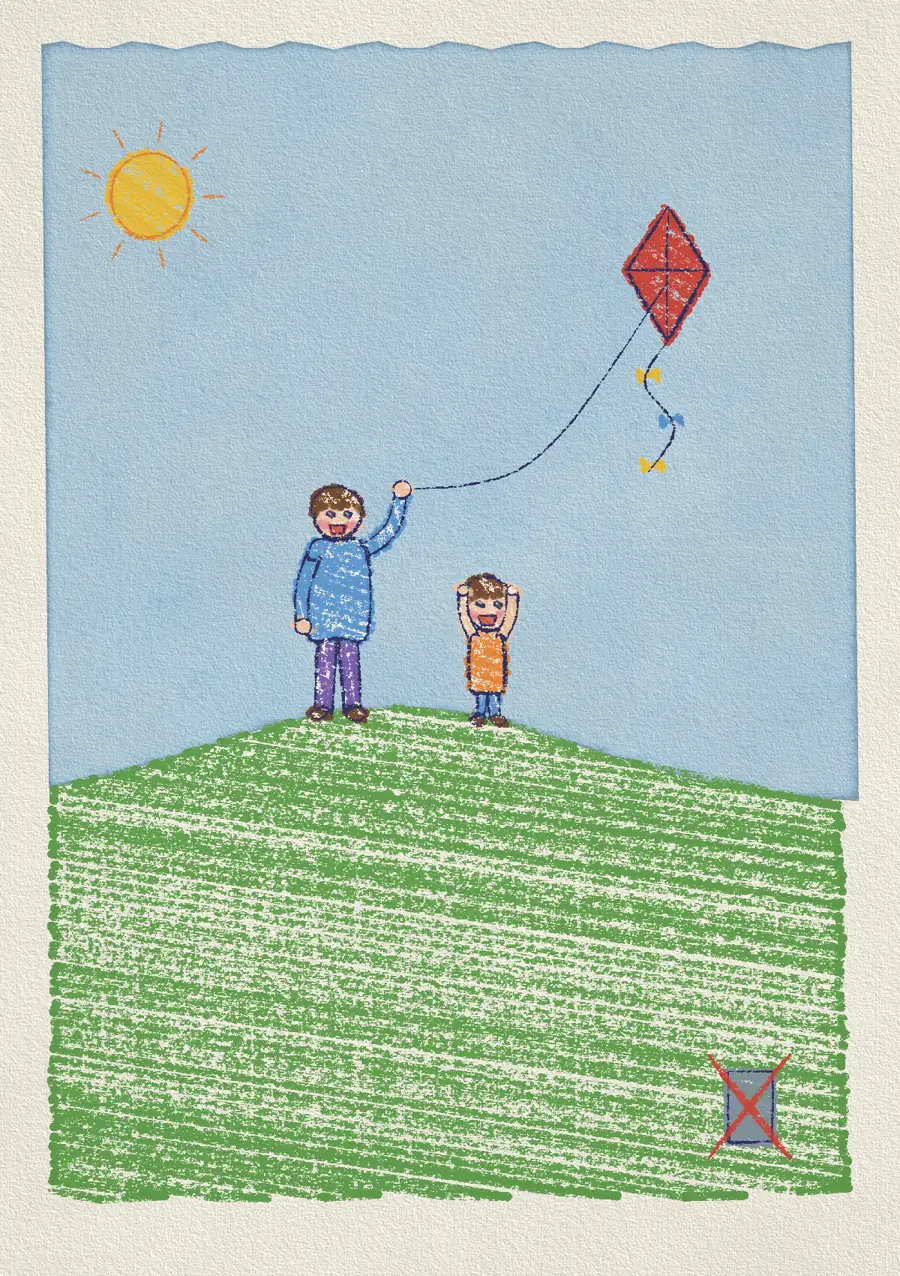
- Correcting: "Grass is green, not purple." Our film No Wrong Colors is about an art teacher who said yes to a blue sun.
- Guessing wrong out loud: "Is that a horse?" ("It's grandma.")
- Drawing on their picture to "show them how"
- Comparing to siblings or classmates
Give prompts, not instructions
Some children sit down and draw happily. Others stare at the blank page. Open prompts help:
Prompts about people
- "Draw our family doing something fun."
- "Draw what grandma does when you visit."
- "Draw what you think dad does at work."
Prompts from imagination
- "Draw a machine that fixes something."
- "Draw where you'd live if you could live anywhere."
- "Draw what the cat dreams about."
Prompts about feelings
- "Draw what a happy day looks like."
- "Draw what worried feels like."
- "Draw love."
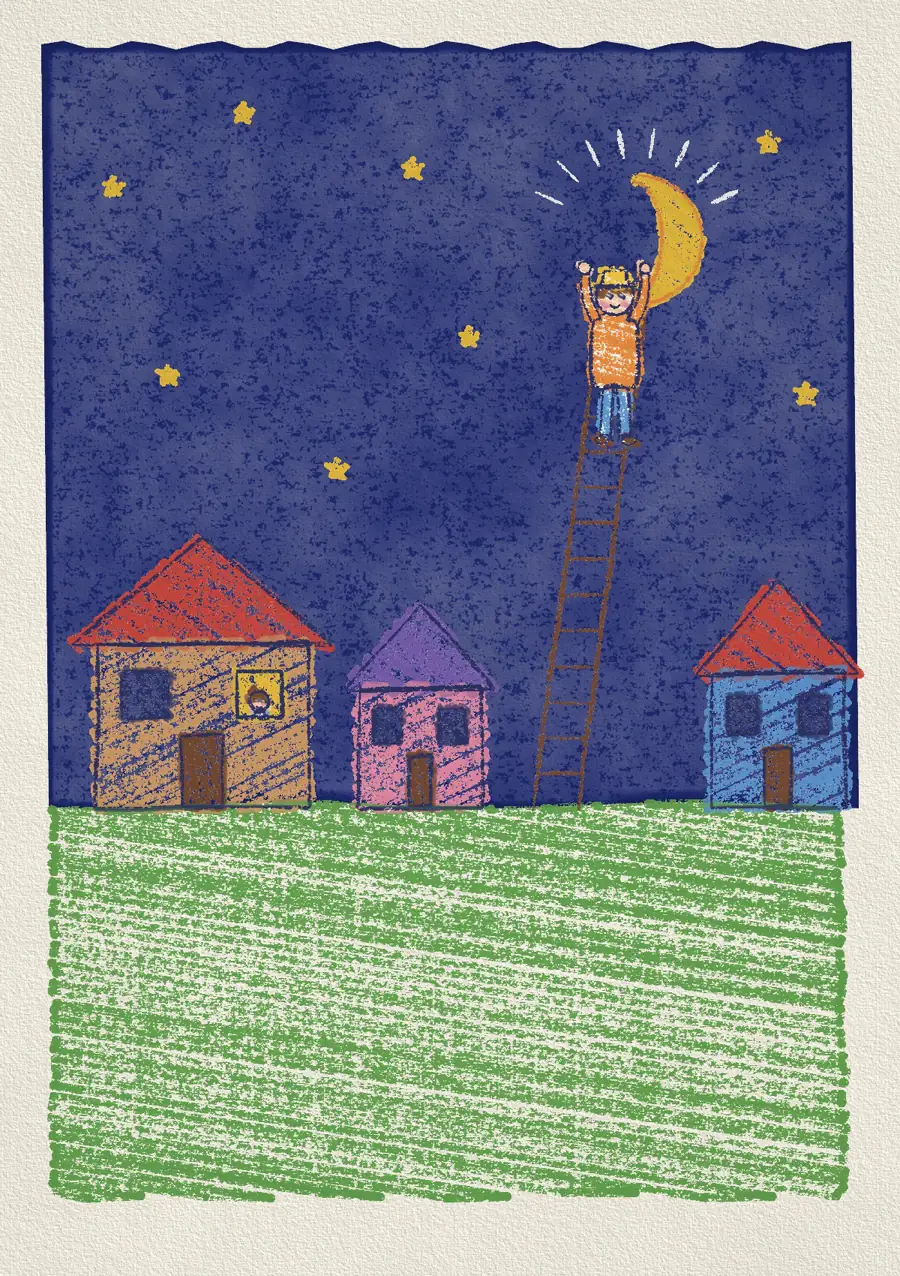
You'll be amazed by the answers. Our film Dad Lights the Moon is about a boy who, asked what his night-shift dad does, drew him on a ladder lighting the moon.
Draw alongside them
Sit down and draw too, badly if necessary. Children love seeing adults do things for fun, not for results. Shared drawing games are great:
- Squiggle game: one person draws a squiggle, the other turns it into something
- Collaborative drawing: take turns adding one thing to the same picture
- Draw each other: always hilarious
Display and value their work
When a drawing goes on the wall, children understand that it matters. A rotating display, like clipboards or a string with clips, lets every drawing have its moment. Ask before throwing anything away, at least when they're watching.
For a full system, see our guide to organizing kids' artwork.
When your child says "I can't draw"
This usually happens when children start comparing their drawings to realistic pictures. A few things help:
- Separate drawing from "getting it right." Remind them that artists draw in all kinds of styles.
- Show them different kinds of art: picture books, cartoons, folk art, abstract painting.
- Try observational drawing for fun: draw a shoe, a plant, a hand. Slowing down to look closely often surprises them.
- Value the ideas, not the polish. The best children's drawings are full of ideas.
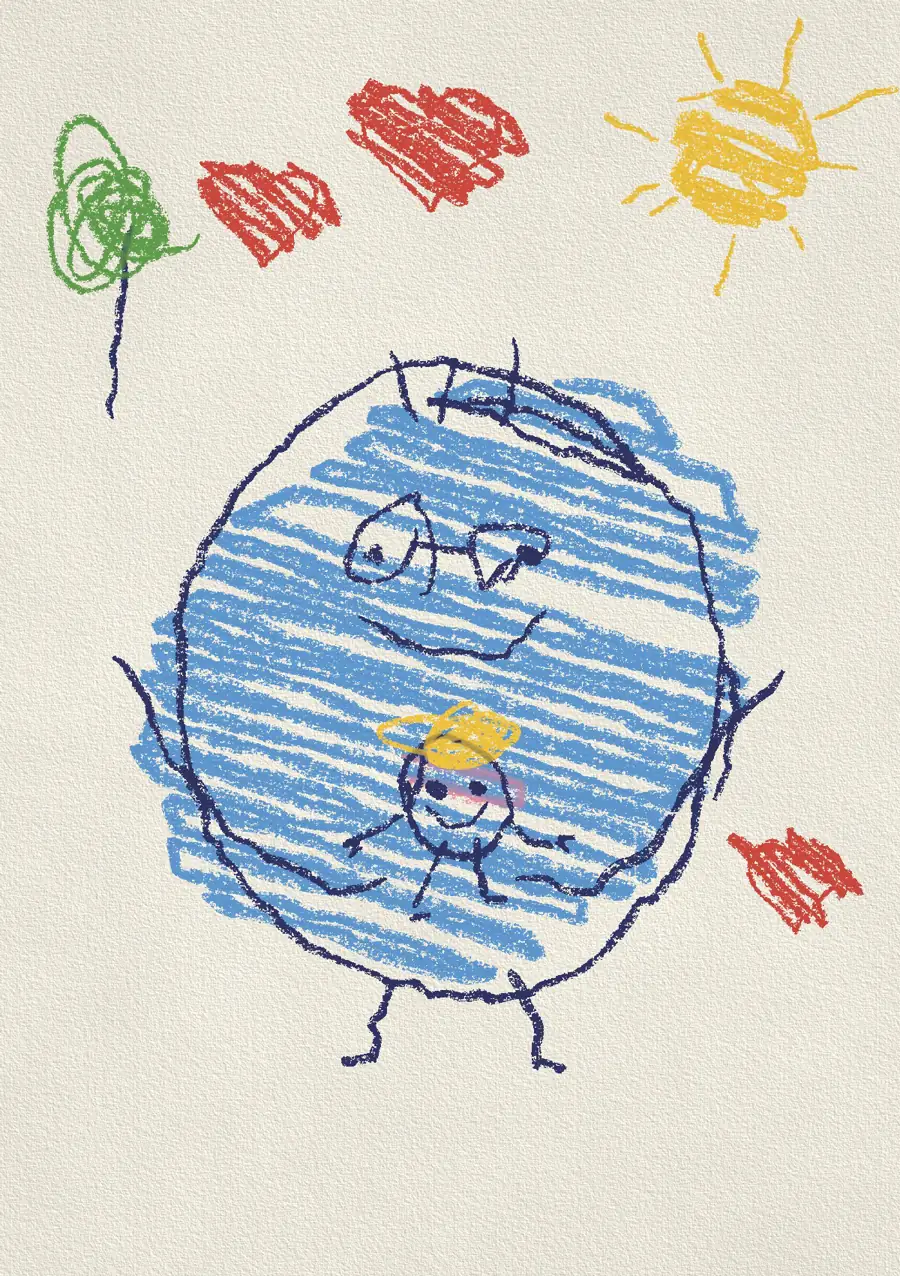
- Never fix their work. Our film Why We Never Fix a Child's Drawing makes the case.
Let drawings tell stories
Many children love to tell stories through drawings. Ask them to narrate as they draw, and write the story down. Our film The Lighthouse Who Was Afraid of the Dark is about the bedtime story hidden inside a child's drawing of a lighthouse, an old shoe and a hundred yellow dots.
Celebrate the drawings that matter
When your child makes something that moves you, tell them, specifically. "This drawing of grandpa made me laugh because you remembered his funny hat." And consider keeping it in a way that lasts.
At ANORA, we embroider children's drawings on hoodies and T-shirts, exactly as drawn. For a child, seeing their drawing worn by someone they love is a powerful message: your art matters. You can upload a drawing here and preview it first.
Frequently asked questions
How can I encourage my child to draw more?
Keep simple materials within reach, offer open prompts, draw alongside them, display their work and respond with interest rather than corrections.
What should I say about my child's drawing?
Describe what you see and ask questions: "Tell me about this," "You used a lot of blue," "Who's this?" This invites them to talk about their ideas.
What art supplies should young kids have at home?
Plenty of paper, chunky crayons, washable markers and, for older kids, colored pencils. A few quality basics are better than a huge set.
Why do kids stop drawing?
Often around ages 8 to 10, children start comparing their drawings to realistic images and feel they're "not good." Encouraging ideas over accuracy helps many keep going.